
Set your monthly and daily target and use this tracker to make a note of your progress.
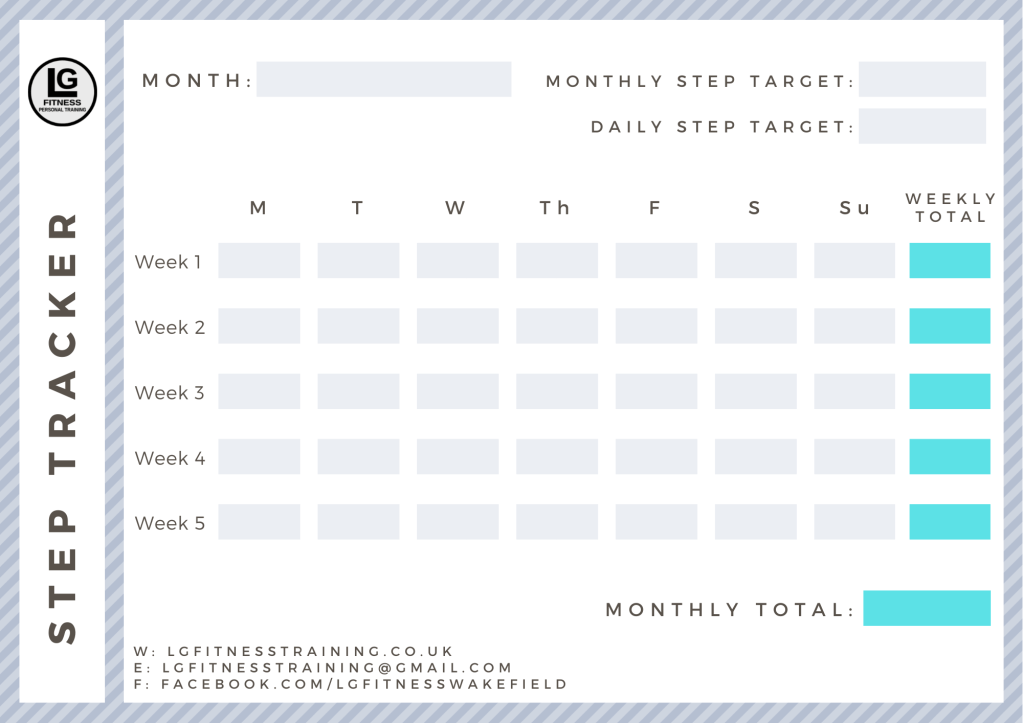
Set your monthly and daily target and use this tracker to make a note of your progress.
Use this habit tracker to plan your actions for the week.
Planning your commitments and actions will mean you’re much more likely to stick to them.
The key to reaching your goals is being consistent in your actions.
Are you training or exercising? I classify exercising and training as two separate things. Exercise, I’d class as expending energy in some form – be it riding a bike, swimming, a workout in the gym. Training is moving towards a specific goal, for a given sport or activity – and to increase your performance. So all training is exercise but not all exercise is training! Like…..“All thumbs are fingers, but not all fingers are thumbs” (10pts if you know where that quote’s from…).
Maybe think about this… If you’re working towards a goal that might not be performance related (say, for instance, moving down a couple of clothes sizes), it’s easier to focus on a performance based goal that will help us get there and take some of the pressure and stresses of changing shape. I find with clients this will help move you towards your goal – and help you have another point in helping you achieve what you want.
Swimming 1km, running a 10km race, playing for a football team, be better at Skiing – it can be anything you want. These are all things that would help a person move towards their main target – and likely be around people with similar goals. This isn’t for everyone and some people love training and that alone is enough for them. Good on them, personally I couldn’t give two hoots about how much I can press or squat. I just care that I can do the things I love doing to a standard that I want to do them (which btw is forever increasing).
I started to get back into my cycling a lot more recently due to Covid. I’ve had a lot more chance to use my bike and improve my skills. Because of this, I’ve focused a lot of time and effort into doing things that support this. Not all of it has to occur in the gym – but everything I do is for that specific reason.
Have a think of what you like to do and what your goal is. Combine the two and you will have more success – and fun along the way.
With shorter hours of daylight this time of year, people inevitably start to stay inside more – and with more people working from home than ever before, it’s important to keep your NEAT energy expenditure up.
Non-exercising activity thermogenesis is basically walking and moving whilst not actually, specifically training. This can, in many people, have a larger impact on the amount calories burnt in a day than their actual workout! So it’s fairly important to have a regular check on it.
Modern lifestyle can be very sedentary if you let it… I mean, you can turn the heating up and your lights on with a touch of a button on your phone!
Having something that tracks your steps is a good way to keep you mindful of how much you move outside of training. And because we often move less around this time of year, it can just keep it at the forefront of your mind to move more and get your steps in
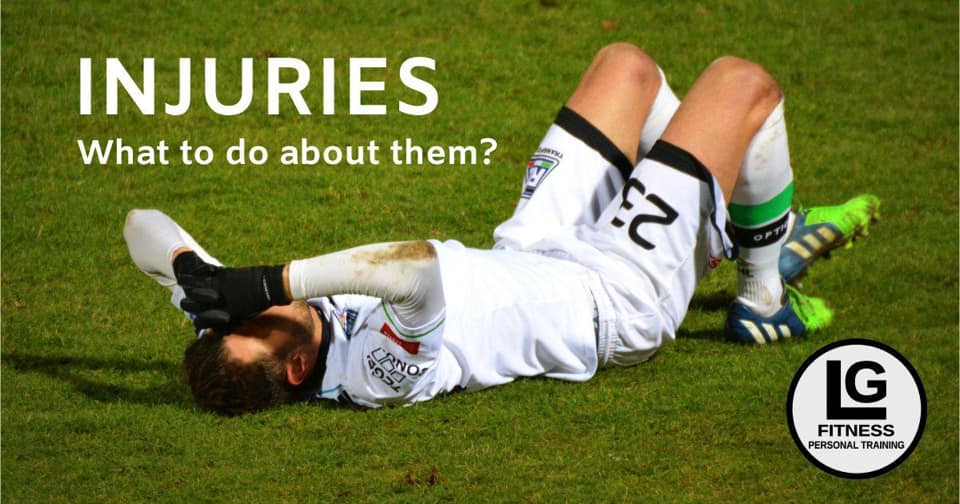
When training, playing sport, or you’re just out and about and feel something “go” – if you have a pain which continues, there are a few protocols I go by…
For example, someone is out running and feels a pop and sharp pain in the back of their leg.
Step 1 (first 30 seconds to 1 hour after injury):
Rate how bad the pain is. If it’s unbearable obviously you will have to seek professional help. If it’s manageable then continue with the following steps.
Step 2 (1 hour to 1 day after injury):
Apply ice to the painful area. Generally speaking, whether an injury is inflamed to the naked eye or not there may be some swelling. Applying ice can reduce this swelling and offer pain relief. If the pain is very significant, again, seek professional help!
Step 3 (1 day to 3 days after injury):
Assess any inflammation. If there is none then start applying heat. Heat will increase blood flow to that area allowing it to heal. If the area remains swollen keep applying ice. At this point, if there is no reduction in pain or swelling, seek medical help.
As well as the above, it’s important to stay hydrated as it allows the body to function as normal and will help with muscle and fascial suppleness – allowing healing to occur quicker.
After the pain has gone and you feel like you are “fixed”, it’s important to take your time and ease back into any training. Start with light movements and build up to previous weights, speeds etc.
These types of pains can occur fairly frequently if exercising regularly, so a personal suggestion would be to purchase two heat treatment packs – one which can be kept in the freezer and another that can be heated in the microwave when needed.
I recommend running to a lot of clients. It’s brilliant for head space, it releases a range of hormones that make you feel mint and it’s fantastic for burning calories and cardiovascular fitness. However, normally, when I ask a client “what do you think about running?” or “have you tried running” a guard comes up… “I hate running” and “I can’t run”, are the usual responses.
The reason for this? Normally, when people run ‘in the real world’ it’s often a fast-paced run. You might be late for something, your child might be about to walk somewhere they shouldn’t. Which means you end up sprinting – causing you to get out of breath as you’ve gone as fast as you can! Which then leads you to believe you can’t run.
Don’t get we wrong, I have some very fit clients who just dislike running – and that’s fine! You don’t have to run! But dismissing it before even trying it is something else entirely. Injuries, specific goals, imbalance or instabilities may also mean running may not be the most appropriate exercise for you, but don’t let the reason you don’t do it be fear and lack of self-belief!
Ready to give it a go? Take a look at the few simple steps below to build belief and momentum:
1. Run a suitable distance. Not 5km, not 2km, not even 1km. Run the equivalent of to the end of the street and back – 100m.
2. Run at the right pace . The number one reason that I come across for people finding running hard is pace. Try a pace that means you can still answer someone if they started to talk to you.
3. Attire. This one is for women really, but get a supportive bra. No real explanation required – if you know, you know!
4. Doing it. Having the intention unfortunately probably won’t swing it. Book it in and commit!
Try these steps to get your foot in the door – and if you find it gives you a good feeling and “wasn’t as bad as I expected” then gradually increase the distance.
You never know if you don’t try!
A regular question people ask me is “how do I lose weight”? When most people that ask this question they are ACTUALLY asking “how do I change shape or lose fat”?
Whether you’re vegan, Keto, a slimming world follower or trying Atkins… the common denominator to losing weight (and therefore changing shape) via your diet is being in a calorie deficit. Calorie deficit means using more calories than we consume (burning more than we eat is how some people like to think of it).
So, whatever diet plan or tracking you are on, start looking at your calories and how much you consume vs how much you are burning.
Start with your BMR (Basal Metabolic Rate) which is an estimate of how many calories you’d burn if you were to do nothing but rest for 24 hours. It gives a ballpark figure of the minimum amount of Kcals (energy) needed to keep your body functioning. Bear in mind, your BMR does not include the calories you burn from normal daily activities or exercise so you may need to add these to your allowance for the day.
An easy way of finding this and tracking Kcals is to use My Fitness Pal. Easily accessed from your phone, you can alter settings to achieve the rate of weight loss you would like. I’d recommend taking some body measurements too (e.g. waist, hips, chest) – weight isn’t always a good indicator of shape change!
On this note, I’d personally aim no higher than 1lb of fat loss per week. Any more, and you’ll probably find you won’t stick to it as it’s just too restrictive.
Start with Kcals in vs Kcals out.
My fitness pal app (also find it in your App Store) https://www.myfitnesspal.com/
My fitness pal BMR calculator
https://www.myfitnesspal.com/tools/bmr-calculator
First off I thought I’d talk a little bit into what we want to create here. The whole point of me doing what I do is to help people achieve what they want and reach their maximum potential. That doesn’t mean drilling into them that they should be eating only veg, rice and chicken. Nor does it mean giving people a exercise plan that will leave them incapacitated for 10 days.
The whole idea of LG Fitness is to create a community in which ideas are shared to help people live happier, healthier more fulfilled lives. To get what, and feel how, they want. Yes we’ll look at specific exercises and nutritional advice which may be more appealing towards some and not others. But this will be an open group where people can discuss what may have worked for them and how others may be able to help take that on themselves – or adapt to their needs. I look forward to starting this journey with you all and if anyone is in need of advice please message me drop me a line!

 LG Fitness